

Aquarium Air Pump & Filter

You May Also Like

Temptations Creamy Purrrr-ee Salmon & Cheese Cat Treats (48g)

Temptations Creamy Purrrr-ee Cat Treats for adult, Mix Flavors Pack of 3 (48g)

Purepet Creamy Cat Lickable Treats, Crab & Chicken, Pack of 5 (75g)


Cat Teaser Playing Wooden Stick Halloween Plush Toy (Skeleton, 41cm) for Cats and Kittens | Interactive Bell Hanging Wood Wand | Fun Teasing, Catching, Chasing and Bonding Play

Sheba With Maguro Pate Rich Premium Adult Fine Cat Wet Food (70g)



Drools Absolute Calcium Sausage Supplement for Dogs

Bio Clean Soap-Pink (Pack Of 3)
Aquarium Air Pump & Filter – Keep Your Aquarium Clean, Fresh, and Full of Life
Create a healthier, cleaner, and more beautiful underwater world with our Aquarium Air Pump & Filter. Whether you have a small home aquarium, a decorative fish tank, or a large freshwater setup, the right air pump and filtration system can make all the difference. Enjoy crystal-clear water, improved oxygen circulation, and a more comfortable environment for your beloved fish with reliable aquarium equipment designed to support everyday fishkeeping.
A thriving aquarium is more than just a glass tank filled with water. It is a delicate aquatic ecosystem where oxygen levels, water quality, and circulation play an essential role in fish health. Our aquarium air pump and filter solutions help you maintain this balance while making aquarium care easier, more convenient, and more rewarding.
Whether you are a beginner setting up your first fish tank or an experienced aquarist looking to upgrade your existing equipment, discover practical solutions that help you maintain a vibrant, healthy, and visually stunning aquarium.
Why Choose an Aquarium Air Pump & Filter?
A clean and well-oxygenated aquarium provides a better environment for fish to swim, feed, and thrive. An aquarium air pump helps move air into the water, while an aquarium filter helps remove waste and support beneficial bacteria that contribute to a stable aquatic environment.
Choosing the right aquarium air pump and filter gives you greater control over your tank’s water quality and daily maintenance.
1. Improve Oxygen Circulation in Your Fish Tank
Fish need dissolved oxygen to survive, and proper water movement helps support gas exchange at the water’s surface. An aquarium air pump can power an air stone or compatible aquarium accessory to create bubbles and improve surface agitation.
Enjoy the beautiful sight of rising bubbles while helping maintain a more suitable aquatic environment for your fish. Better circulation can also reduce stagnant areas when the equipment is appropriately selected and positioned.
2. Maintain Cleaner and Clearer Aquarium Water
Fish waste, leftover food, and decaying plant material can gradually affect aquarium water quality. An effective aquarium filter helps capture suspended particles and provides a surface for beneficial bacteria to grow.
These bacteria help process harmful ammonia and nitrite produced by fish waste. With proper filtration, regular maintenance, and appropriate water changes, you can maintain a cleaner and more stable aquarium.
3. Create a Healthier Environment for Your Fish
A healthy aquarium depends on several important factors, including water quality, oxygen availability, temperature, and appropriate stocking levels.
An aquarium air pump and filter can support these conditions by improving aeration, encouraging water circulation, and helping manage waste. Give your aquatic pets a better environment while enjoying greater confidence in your everyday fishkeeping routine.
4. Make Aquarium Maintenance Easier
Keeping an aquarium clean does not have to feel like a never-ending chore. The right filtration system helps collect debris and supports biological filtration, reducing the amount of manual cleaning required.
Pair your aquarium filter with routine water changes, appropriate feeding, and regular equipment checks to make tank maintenance more manageable.
5. Enhance the Beauty of Your Aquarium
A beautifully maintained aquarium creates a relaxing focal point in your home, office, reception area, or commercial space. Clearer water allows you to appreciate your fish, aquatic plants, and decorative elements more easily.
With suitable aeration and filtration, you can enjoy a more attractive aquarium while supporting the needs of its inhabitants.
Aquarium Air Pump and Aquarium Filter – What's the Difference?
Although aquarium air pumps and aquarium filters can work together, they perform different functions. Understanding their roles will help you choose the right equipment for your fish tank.
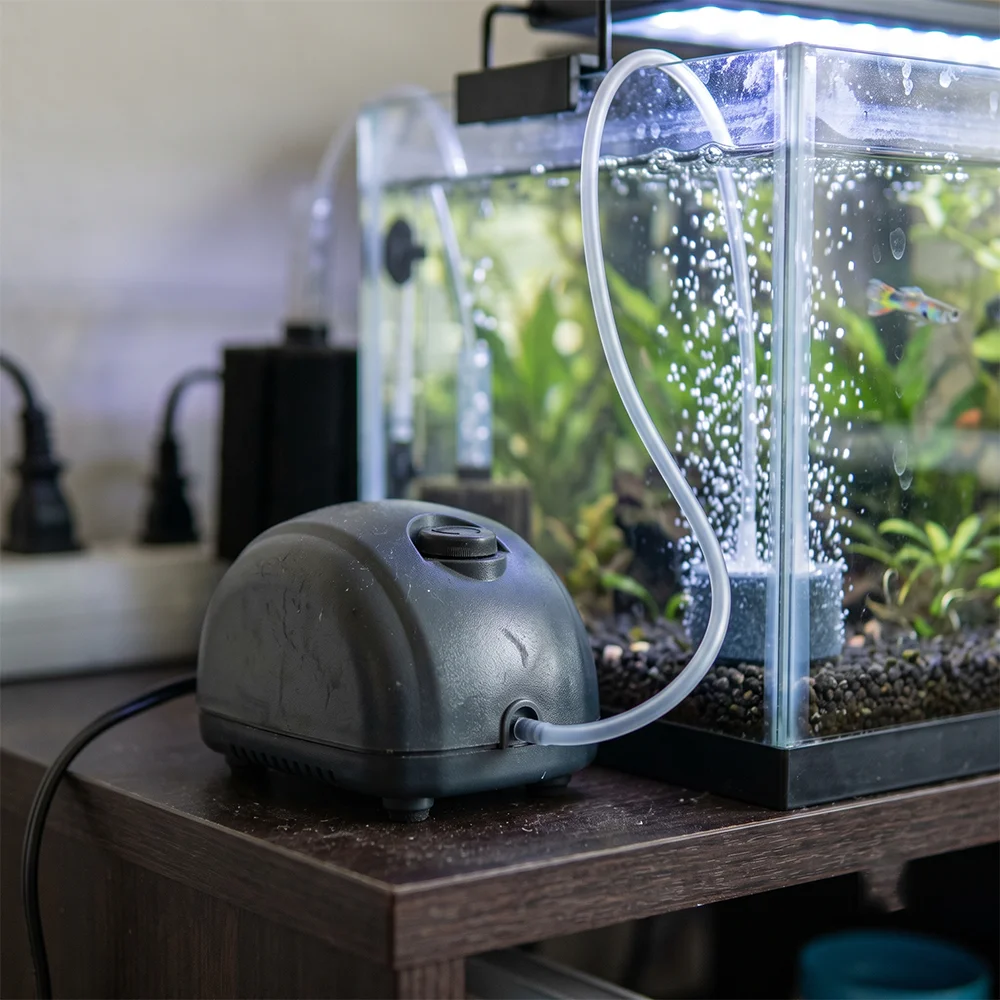
Aquarium Air Pump: An aquarium air pump moves air through connected tubing to compatible accessories, such as air stones and certain sponge filters. It can help increase surface agitation and support oxygen exchange. The pump itself does not directly remove fish waste or replace filtration.
Aquarium Filter: An aquarium filter processes water through filtration media. Mechanical filtration captures particles, biological filtration supports beneficial bacteria, and chemical filtration can remove certain dissolved substances when suitable media is used.
Combined Air Pump and Filter Setup: Some aquarium systems use an air pump to drive a sponge filter. Air rising through the filter creates water movement that draws aquarium water through the filtration material. This arrangement can provide both aeration and filtration in a compact setup.
If you want to maintain a healthy aquarium, choosing equipment that meets your tank’s specific needs is essential. An air pump alone is not a substitute for adequate filtration, and a filter may need additional aeration depending on your aquarium’s conditions.
Key Features to Look for in an Aquarium Air Pump & Filter
The best aquarium air pump and filter are not necessarily the largest or most powerful options. They are the ones that suit your tank size, fish species, filtration requirements, and available space.
When shopping for aquarium equipment, consider these important features.
Efficient Airflow and Water Circulation
A suitable aquarium air pump should provide enough airflow for your connected equipment. Airflow requirements vary according to tank depth, air stone resistance, tubing, and the type of filter being used.
Choose a pump with an appropriate output for your aquarium instead of relying on wattage alone. Correct sizing helps you achieve effective aeration without creating excessive water movement for delicate fish.
Reliable Filtration Performance
Look for an aquarium filter that provides suitable mechanical and biological filtration for your tank. Different filters are designed for different aquarium sizes, stocking levels, and maintenance preferences.
Sponge filters are often useful for smaller aquariums, breeding tanks, and setups containing fry or shrimp. Hang-on-back and canister filters may be more appropriate for other aquarium configurations.
Always check the manufacturer’s recommended tank capacity and flow rate before making your choice.
Quiet and Comfortable Operation
A noisy aquarium pump can interrupt the peaceful atmosphere of a bedroom, living room, or office. If quiet operation is important to you, compare product specifications and look for features such as vibration-reducing feet, balanced construction, and suitable housing.
Actual noise levels depend on the model, installation surface, tubing, airflow settings, and general maintenance. Positioning the pump securely on a stable surface can help reduce unwanted vibration.
Compact and Space-Saving Design
Aquarium equipment should work efficiently without taking unnecessary space. A compact air pump can be convenient for smaller aquariums, desks, and home interiors.
Before purchasing, check the product dimensions and installation requirements to make sure the equipment fits your available setup.
Easy Installation and Maintenance
Practical aquarium equipment should be straightforward to install and maintain. Look for clear instructions, accessible filter media, compatible air tubing, and replacement parts where applicable.
Regular maintenance helps keep airflow consistent and filtration effective, making aquarium care simpler over time.
Energy-Conscious Performance
Aquarium equipment often operates for extended periods, so power consumption is worth considering. Compare the rated wattage and operating requirements of different models to estimate ongoing electricity use.
A well-matched pump can help you meet your aquarium’s aeration needs without unnecessarily oversized equipment.
Benefits of Using an Aquarium Air Pump & Filter Together
Combining suitable aeration and filtration equipment can help you create a more balanced aquarium environment.
Improved surface movement: Air-driven bubbles can encourage surface agitation, supporting oxygen exchange between water and air.
Better waste management: A properly sized filter helps capture particles and supports the biological processes needed to manage fish waste.
Support for beneficial bacteria: Biological filter media provides a home for beneficial microorganisms that help convert toxic ammonia into nitrite and then nitrate. Both ammonia and nitrite should remain at safe, ideally undetectable levels in a properly established aquarium.
Greater aquarium stability: Appropriate filtration, aeration, feeding practices, and routine maintenance work together to help maintain consistent water conditions.
More enjoyable fishkeeping: When your equipment suits your aquarium, daily care can become more predictable, allowing you to spend more time enjoying your fish and less time troubleshooting avoidable problems.
Remember that an aquarium air pump and filter are part of a complete care routine. They do not eliminate the need for water testing, partial water changes, appropriate stocking, and regular cleaning.
How to Choose the Right Aquarium Air Pump & Filter
Finding the ideal aquarium air pump and filter starts with understanding your tank and the fish living inside it.
Consider Your Aquarium Size
Aquariums vary widely in water volume, depth, and stocking density. A pump that works well in a small tank may not provide sufficient airflow for a deeper aquarium or a system with multiple air-driven accessories.
Check the manufacturer’s specifications and match the pump and filter to your aquarium’s size and requirements.
Understand Your Fish’s Needs
Different fish species have different preferences for water movement and environmental conditions. Some fish appreciate stronger circulation, while others prefer gentler flow.
For aquariums containing bettas, delicate fry, shrimp, or other flow-sensitive inhabitants, choose equipment that allows you to manage the current appropriately.
Choose the Right Filter Type
Consider the type of aquarium filter that best suits your setup.
- Sponge filter: A practical choice for breeding tanks, shrimp aquariums, and many smaller freshwater setups. It provides mechanical and biological filtration and is commonly driven by an air pump.
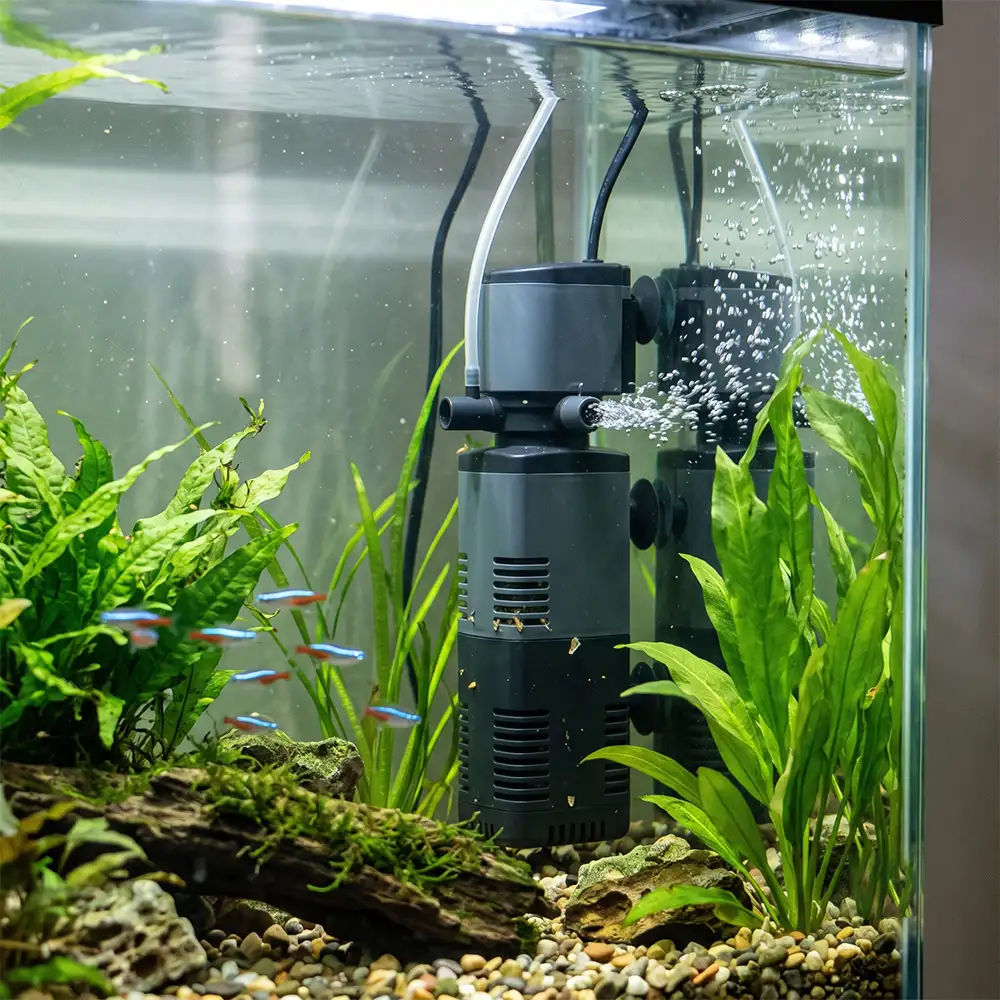
- Internal filter: Fits inside the aquarium and is often convenient for small to medium-sized tanks, depending on the model.
- Hang-on-back filter: Hangs on the aquarium’s rear edge and can provide convenient filtration without occupying much swimming space.
- Canister filter: Often suited to larger aquariums or setups requiring substantial filtration capacity, depending on the model and installation.
Each filter type has different maintenance requirements and performance characteristics. Choose according to your aquarium rather than appearance alone.
Check Airflow and Power Requirements
Before buying an aquarium air pump, check its airflow rating, pressure capability, power consumption, and compatibility with your chosen accessories.
If you plan to run several air stones or sponge filters, make sure the pump can deliver sufficient airflow to all connected outlets. An adjustable airflow feature may offer additional flexibility.
Think About Maintenance and Replacement Parts
Filter sponges, cartridges, and other media need periodic cleaning or replacement according to their type and condition. Air stones and tubing may also need attention if they become clogged or worn.
Choosing equipment with accessible components can make long-term ownership easier.
Aquarium Air Pump & Filter for Different Aquarium Setups
Every aquarium has different requirements. Selecting suitable equipment helps you build a setup that works for your fish, available space, and maintenance routine.
Small Home Aquariums
Small fish tanks can benefit from appropriately sized aeration and filtration equipment. Compact air pumps and sponge filters may be suitable for certain setups, provided the flow rate and filtration capacity meet the needs of the fish.
Avoid overcrowding, and remember that smaller aquariums can experience rapid changes in water quality.
Freshwater Community Aquariums
Community aquariums containing compatible fish often benefit from dependable filtration and suitable water movement. Choose a filter that can manage the tank’s biological load and maintain appropriate circulation.
Additional aeration may be helpful when oxygen demand is elevated or surface movement is limited.
Breeding and Fry Tanks
Aquarium sponge filters are popular in many breeding setups because they provide biological filtration without the strong intake suction associated with some other filter designs.
When powered by a suitable air pump, they can support gentle water movement and filtration. Always select an appropriate sponge and airflow level for the species and life stage being kept.
Shrimp Aquariums
Shrimp aquariums require stable water conditions and equipment that reduces the risk of small animals being drawn into filter intakes. Sponge filters are a common option for this reason.
Choose gentle, appropriate airflow and maintain suitable water parameters for your shrimp species.
Planted Aquariums
Planted tanks need a balance of circulation, filtration, lighting, and nutrients. Additional aeration may be useful in some circumstances, particularly at night or when oxygen levels are a concern.
However, strong aeration can increase carbon dioxide loss in planted aquariums where carbon dioxide is deliberately added. Select your equipment and operating schedule according to the tank’s specific requirements.
How to Install an Aquarium Air Pump & Filter
Correct installation helps your aquarium equipment perform as intended. Always follow the instructions supplied with your specific model.
- Choose a suitable location. Place the air pump on a stable, dry surface outside the aquarium, in a well-ventilated location.
- Connect the air tubing. Attach compatible tubing securely to the pump outlet and the air-driven accessory.
- Install the filter or air stone. Position the accessory inside the tank according to the manufacturer’s instructions.
- Prevent water backflow. Use a compatible check valve when appropriate, particularly when the pump is positioned below the aquarium’s water level. Follow the manufacturer’s installation guidance.
- Manage electrical safety. Keep plugs, sockets, and electrical connections away from water. Use a drip loop on power cords and disconnect equipment before performing maintenance.
- Start and inspect the system. Confirm that airflow is steady, the filter is working correctly, and the water movement is suitable for your fish.
- Monitor aquarium conditions. Check your fish’s behavior, water quality, and equipment performance after installation.
A few careful installation steps can help you enjoy reliable operation while reducing avoidable problems.
Aquarium Air Pump & Filter Maintenance Tips
Regular maintenance helps protect your investment and supports a healthier aquarium.
- Clean filter media carefully: Rinse reusable biological media in removed aquarium water when necessary to preserve beneficial bacteria. Avoid washing it with untreated tap water or replacing all biological media at once.
- Inspect the air tubing: Check for kinks, blockages, leaks, and signs of wear that could reduce airflow.
- Check air stones regularly: Mineral deposits and debris can restrict airflow. Clean or replace the air stone according to its material and instructions.
- Monitor filter performance: Reduced flow, unusual noises, or inconsistent bubbles may indicate a blockage, worn component, or other maintenance issue.
- Perform regular water changes: Filtration does not remove the need for appropriate partial water changes and water testing.
- Avoid overfeeding: Excess food increases waste and places additional demands on your filtration system.
- Keep equipment secure: Check connections and ensure the pump is positioned safely and cannot be pulled into the water.
Consistent care helps your aquarium remain attractive and makes it easier to identify potential issues before they become serious.
Common Aquarium Air Pump & Filter Problems and Solutions
Even reliable aquarium equipment may occasionally need attention. Understanding common problems can help you identify the next step.
Weak airflow: Inspect the tubing for kinks, check connections, and clean or replace a clogged air stone. Confirm that the pump is suitable for the water depth and connected accessories.
Excessive noise or vibration: Make sure the pump rests on a stable surface. Check for loose connections, obstructions, and signs of wear. Follow the manufacturer’s guidance if the noise continues.
Reduced filter flow: Check the intake, impeller where applicable, and filter media for accumulated debris. Clean components according to the manufacturer’s instructions.
Cloudy water: Cloudiness can have several causes, including a new aquarium’s developing biological cycle, suspended debris, or bacterial blooms. Test water parameters, avoid overfeeding, and verify that the filter is functioning correctly.
Fish gasping at the surface: This can indicate low dissolved oxygen or a water-quality problem. Increase appropriate surface agitation, check the temperature, and test ammonia and nitrite promptly. If fish show signs of distress, take suitable corrective action immediately.
Never assume that a pump or filter alone will solve every aquarium problem. Monitoring water conditions is essential for identifying the actual cause.
Why Invest in Quality Aquarium Equipment?
Your aquarium deserves equipment that matches its needs. A suitable aquarium air pump and filter can help support reliable aeration, effective waste management, and a more stable aquatic environment.
Choosing carefully can also reduce frustration caused by insufficient airflow, unsuitable filter capacity, difficult maintenance, or excessive noise.
When comparing options, look beyond the initial purchase price. Consider the expected performance, power consumption, maintenance requirements, replacement media availability, and suitability for your tank.
The right equipment helps you build an aquarium that looks beautiful and is easier to manage over the long term.
Frequently Asked Questions About Aquarium Air Pump & Filter
1. What is an aquarium air pump used for?
An aquarium air pump supplies air to compatible accessories, such as air stones and sponge filters. These accessories can create bubbles and improve surface agitation, helping support oxygen exchange.
2. Is an aquarium air pump the same as an aquarium filter?
No. An air pump moves air, while an aquarium filter processes water to remove particles and support biological filtration. Some filters, including sponge filters, use an air pump to operate.
3. Do all fish tanks need an air pump?
Not necessarily. Many aquariums maintain sufficient oxygen exchange through appropriate filtration and surface movement. Additional aeration may be beneficial in tanks with high oxygen demand, limited circulation, or specific equipment requirements.
4. Can I use an aquarium air pump and filter together?
Yes. They can work together when their specifications and connections are compatible. For example, an air pump can power a sponge filter while also producing water movement that encourages surface agitation.
5. How do I choose an aquarium air pump for my fish tank?
Consider the aquarium’s water volume, depth, fish species, required airflow, connected accessories, and pump specifications. Choose a model that meets your needs without creating excessive water movement.
6. How often should I clean my aquarium filter?
Cleaning frequency depends on the filter type, stocking level, feeding habits, and water conditions. Inspect the filter regularly and clean it when needed. Preserve beneficial bacteria by avoiding unnecessary or overly aggressive cleaning of biological media.
7. Does an aquarium air pump help keep water clean?
An air pump alone does not remove fish waste. It can support water movement and operate air-driven filters, but effective mechanical and biological filtration is needed to help manage waste and maintain water quality.
8. Can an aquarium air pump run continuously?
Many aquarium air pumps are designed for continuous operation, but you should verify the manufacturer’s specifications. Monitor the equipment for overheating, unusual noise, or changes in airflow.
9. Is an aquarium air pump suitable for a small fish tank?
Yes, if the pump is appropriately sized for the tank and its accessories. Choose adjustable or gentle airflow when necessary to prevent excessive current for small or flow-sensitive fish.
10. How can I improve oxygen levels in my aquarium?
Maintain suitable surface movement, ensure your filtration system is functioning correctly, avoid overcrowding, and monitor water temperature. An appropriately sized air pump can help improve surface agitation when additional aeration is needed.
Upgrade Your Aquarium with the Right Air Pump & Filter
Bring your aquarium care routine to the next level with an Aquarium Air Pump & Filter that suits your tank, fish, and filtration needs. From compact home aquariums to specialized breeding setups, choosing the right equipment can help support better water quality, suitable oxygen circulation, and a more enjoyable fishkeeping experience.
Discover the benefits of dependable aquarium equipment, simplify routine maintenance, and create an underwater environment you can feel proud of.
Shop our Aquarium Air Pump & Filter collection today and take the next step toward a cleaner, healthier, and more vibrant aquarium.